
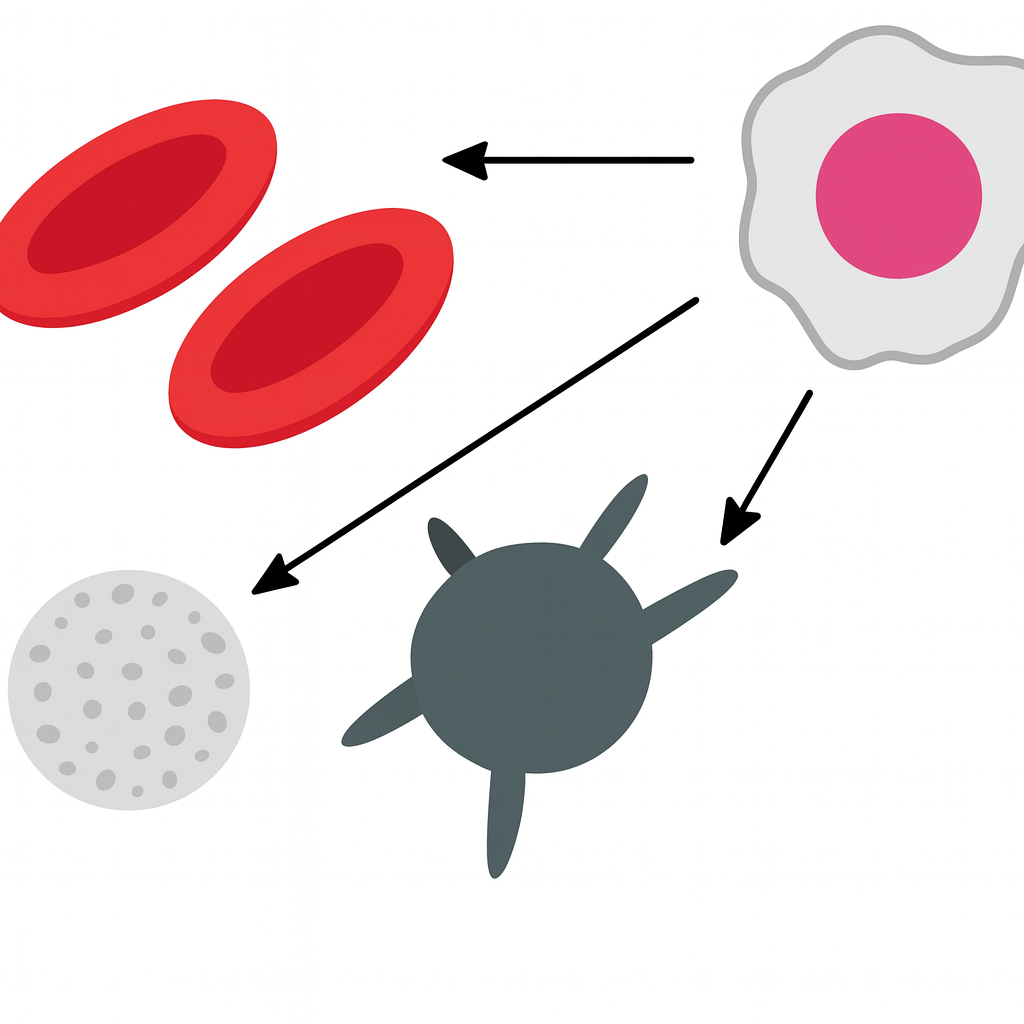
When we speak of stem cells, we are referring to blood-forming stem cells (hematopoietic stem cells). These are located in the bone marrow and, in healthy individuals, ensure the production of red blood cells (erythrocytes for oxygen transport), white blood cells (leukocytes for immune defense), and platelets (thrombocytes for blood clotting). To accomplish this, the stem cells divide regularly and mature into one of the cell types mentioned above.
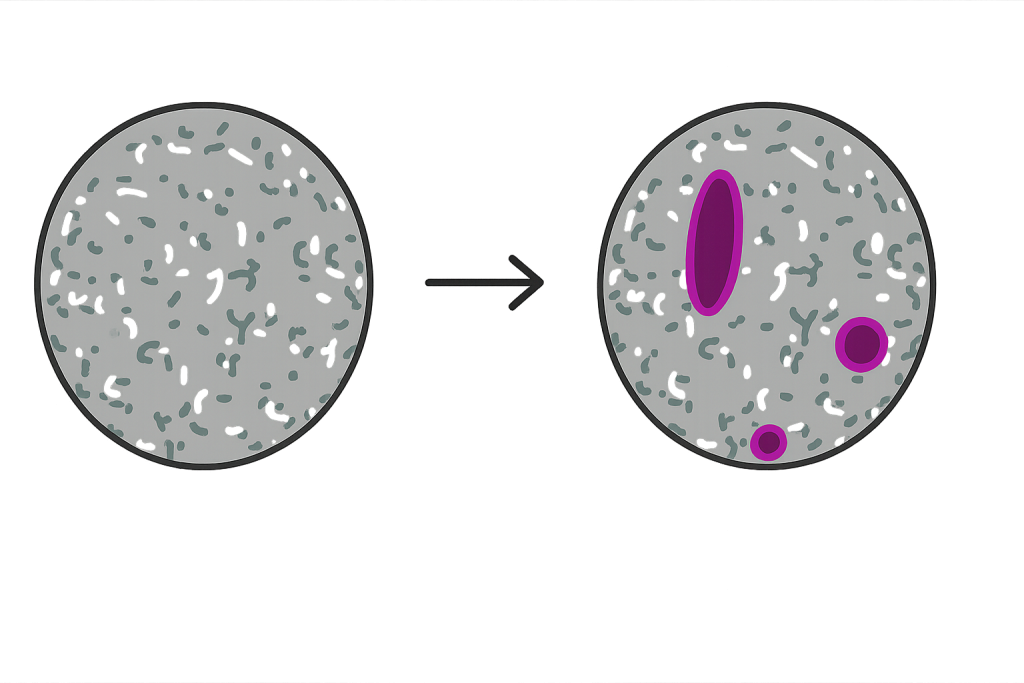
In the case of blood cancer, a cell mutates on its way to becoming a mature cell and begins to proliferate uncontrollably. These nonfunctional cells then flood the bone marrow and bloodstream, displacing normal blood formation. As the normal blood cells and their functions increasingly diminish, symptoms such as fatigue, paleness, shortness of breath, frequent infections, or increased bleeding and bruising occur. Under the microscope, the blood appears filled with uniform clones.
The umbrella term blood cancer encompasses several diseases that differ in which cell becomes malignant and how rapidly the illness develops. These include leukemias (Acute Lymphoblastic Leukemia, Acute Myeloid Leukemia, Chronic Lymphocytic Leukemia, Chronic Myeloid Leukemia), lymphomas, and myelomas.
There are various strategies for treating blood cancers, such as chemotherapy, radiation therapy, and immunotherapy. However, for many people with blood cancer, an allogeneic stem cell transplant (using donor cells) often represents the last chance for a cure. This is because the new, healthy hematopoietic system also transfers a new immune system that acts aggressively against the cancer cells.
Whereas the chronic leukemia forms, Acute Myeloid Leukemia, as well as myeloma and lymphoma tend to occur in (older) adults, Acute Lymphoblastic Leukemia is the most common cancer in children. Today, many children have good chances of recovery, due in part to the fact that stem cell transplantation has become increasingly effective and safer over recent decades.
Because an allogeneic stem cell transplant transfers a new blood-forming system and a new immune system, this therapy is also used for other severe diseases. These include disorders of blood formation such as aplastic anemia, thalassemia, and sickle cell disease, as well as congenital immune deficiencies such as severe combined immunodeficiency (SCID).