A stem cell donation is a medical procedure in which healthy blood stem cells are transferred from donors to patients. Blood stem cells are the origin cells of our blood and are mainly found in the bone marrow. They have the unique ability to develop into all types of blood cells: red and white blood cells and platelets. In a stem cell donation, a small portion of these vital cells is collected and transplanted to patients with a serious blood disease to renew and restore their blood-forming system. There are no long-term health disadvantages for healthy donors. There are two methods of collecting stem cells – peripheral blood stem cell donation and bone marrow collection.
The challenge in stem cell donation is to find suitable donors – in other words, a “genetic twin”. This means two people whose tissue characteristics, especially the HLA markers (human leukocyte antigens), match almost perfectly. This compatibility is crucial for the success of a stem cell transplant. There are millions of possible HLA combinations, which makes the search for a suitable donor difficult. Between siblings there is a 25% chance of being HLA-identical. For 70–80% of patients, however, an unrelated donor has to be found; the probability of being HLA‑compatible can range from 1 in 20,000 to several million. This is why it is so important that as many people as possible register as potential donors – anyone could be the life‑saving “genetic twin” for a patient.
Healthy people aged 17 to 55 years with a permanent residence in Germany can register as stem cell donors (17‑year‑olds are activated from their 18th birthday). You can only be registered with one stem cell donor registry. Exclusion criteria include serious heart, lung or kidney diseases as well as neurological or psychiatric conditions. Cancer (even if cured), autoimmune diseases and infections such as HIV or hepatitis B and C, as well as severe obesity (BMI over 40), also exclude registration.
Registration is quick and straightforward. After providing your contact details and answering a few questions about your health, you receive three cheek swabs. Each swab is rubbed on the inside of your cheek for one minute. From the cells collected this way, the tissue (HLA) markers relevant for transplantation can be analysed in the laboratory. These are then stored in a database and used for the donor search. When suitable donors are searched for, these databases also cooperate internationally.
We cooperate with German donor registries. To ensure they can contact you quickly and reliably if you are identified as a potential donor, you need a permanent residence in Germany. If you live in another country (and are only in Germany temporarily for Erasmus, a PhD, etc.), you can register with a registry in that country. Ultimately, all registries worldwide work together and patients are matched internationally, but the donation procedure is most easily organised regionally.
No, please do not. If you have already registered as a stem cell donor in the past (for example as part of a campaign for a specific patient or at school), all necessary information is already available. It does not matter with which registry you registered (e.g. DKMS or DSD), because all information is collected in the nationwide ZKRD register. Registering again only causes unnecessary costs and effort.
This information helps to better estimate the likelihood of finding a match. In different regions of the world, the tissue characteristics that need to match for a successful donation occur with different frequencies. Therefore, the probability of a match is higher among people who share a similar family background.
Because a relatively large number of people are already registered in Europe and North America, people with a non‑European background often have more difficulty finding a suitable match. One important goal is therefore to build a diverse, globally distributed pool of donors.
No. Up until the actual donation you are always free to decide whether you are able and willing to donate. You can also have your data deleted from the registry at any time. Sometimes medical reasons or pregnancy speak against a donation. Nevertheless, when you register you should be aware that you might be selected as a donor and that you should in principle be able to imagine donating, because a potential match also carries hope and chances for the patients.
Peripheral blood stem cell donation – approx. 90%
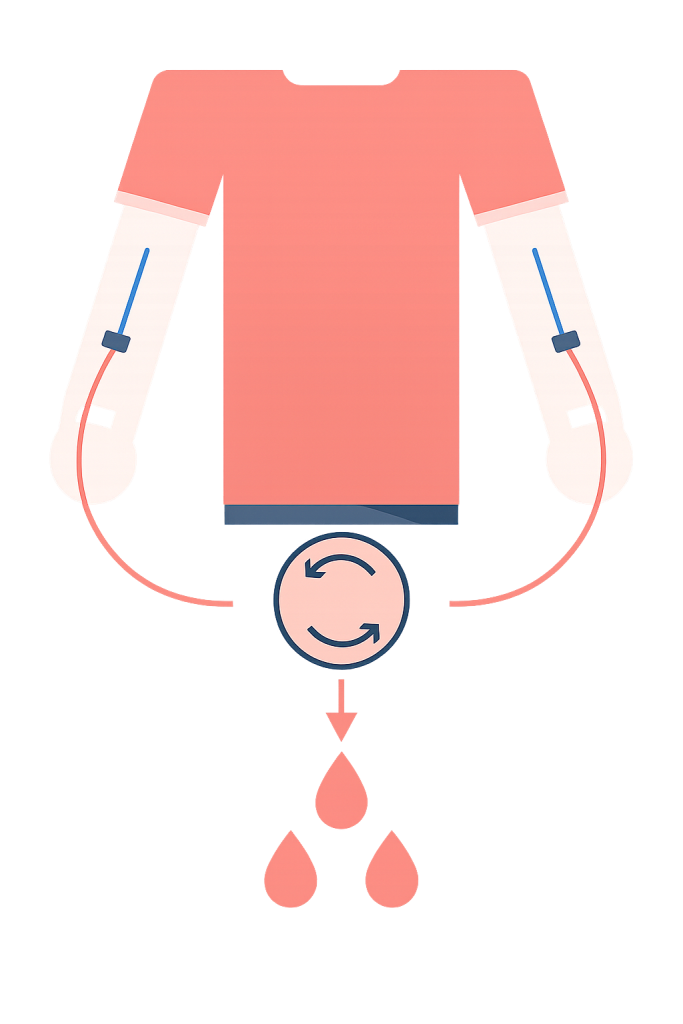
Donors receive a naturally occurring protein (G‑CSF) for 4–5 days, which stimulates the production of stem cells and helps them move from the bone marrow into the bloodstream. On the day of donation, blood is taken from a vein in one arm, the stem cells are filtered out and the remaining blood is returned to the body through a vein in the other arm. This process takes about 3–5 hours and is usually done on an outpatient basis.
Bone marrow collection – approx. 10%
This method is carried out under general anaesthesia in hospital. About one litre of a bone marrow–blood mixture is taken from the pelvic bone. The procedure takes about one hour, and donors usually stay in hospital for 2–3 days.

Stem cell registries arrange the donation at a hospital as close to you as possible. They aim to keep the process as easy as possible for you – organizing travel and accommodation, and reimbursing expenses such as lost wages.
The collected cells are then transported to the recipient by a courier as quickly as possible.
No, stem cell donation has nothing to do with the spinal cord (part of the central nervous system) or the spine. Nowadays, stem cells are usually collected from a vein; only in about 10% of cases are they obtained from the pelvic bone during a surgical procedure.
A healthy adult can safely donate a portion of their stem cells. After the donation, the remaining stem cells divide again and redistribute throughout the bones. Your body also keeps its pool of blood‑forming cells stable and healthy in this way under normal circumstances.